Reduce Complexity
One integrated solution for multiple site needs.
Every deployment is different. We engineer each Recon Rig around your power requirements, operational goals, towing capacity, and workforce needs.
Engineering Priority
Load requirements shape the full system architecture.
Engineering Priority
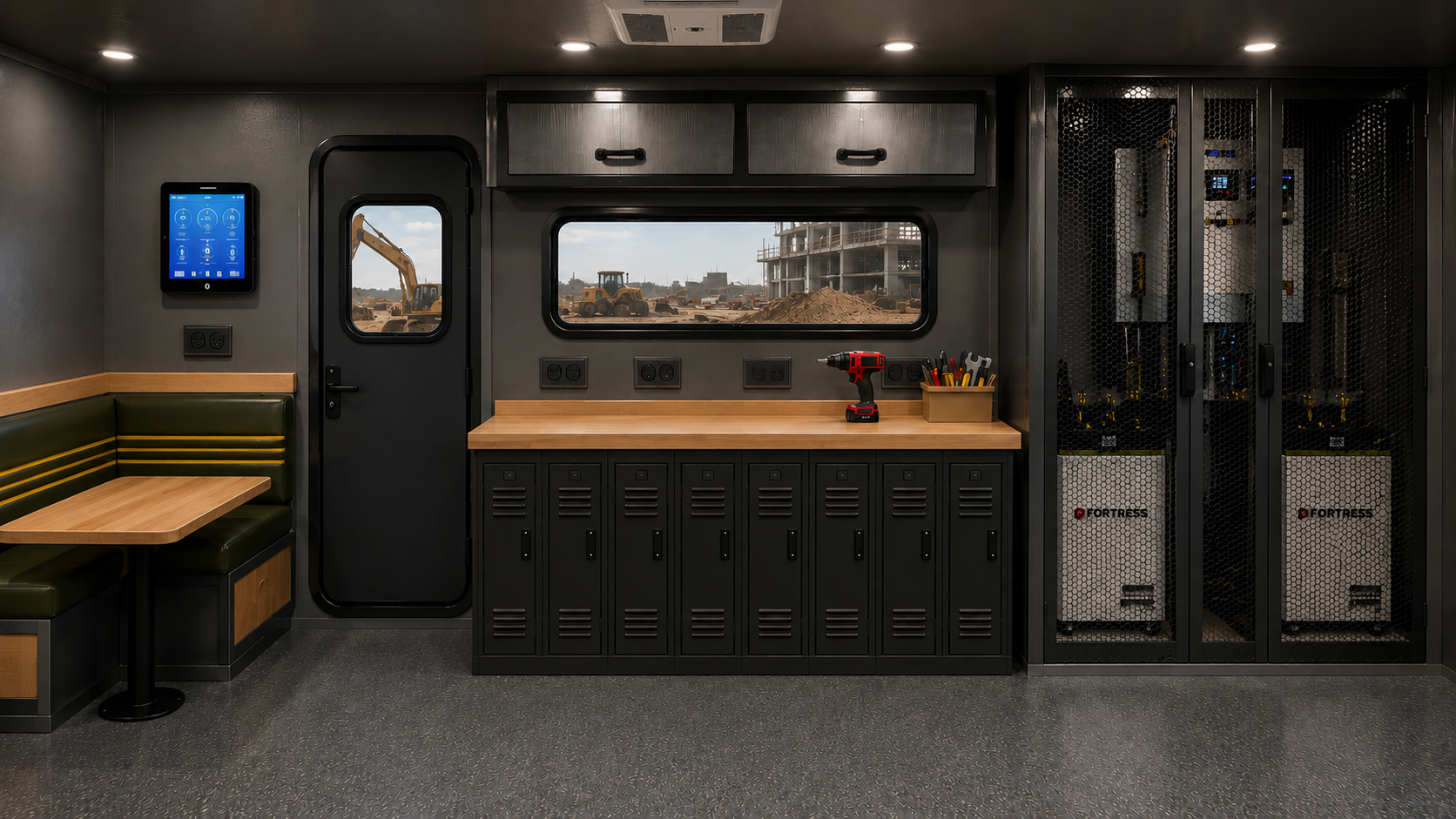
Workspaces, support amenities, and security are added with intent.
Engineering Priority
Capacity, payload, and deployment realities stay in balance.
Every Recon Rig begins with a heavy-duty chassis designed for real-world deployment. We start with the frame, axles, suspension, braking systems, and payload capacity before designing the power system or workspace.
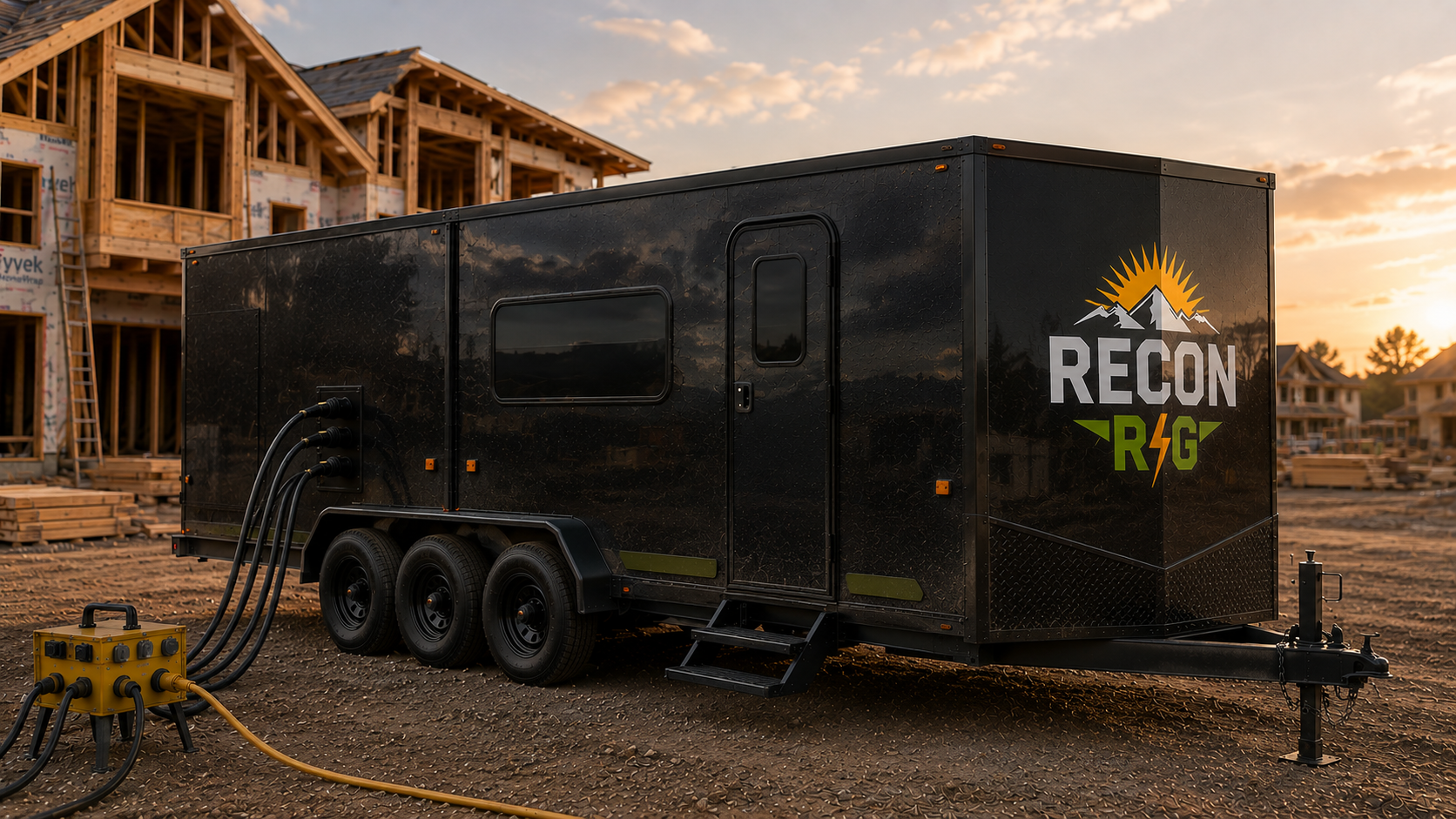
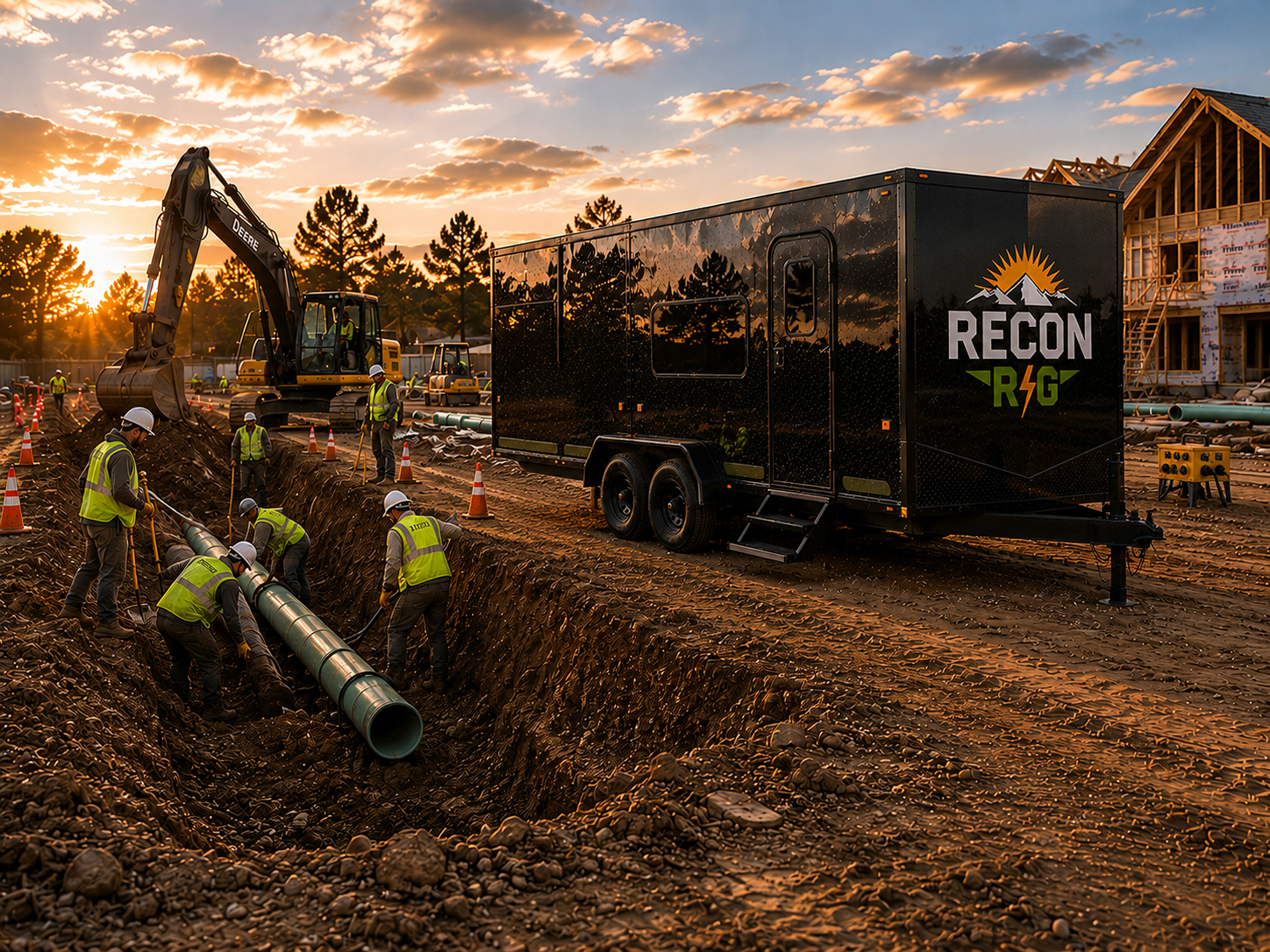
Every deployment begins with understanding your power requirements. Whether supporting a construction site, remote operation, event, emergency response mission, or mobile command center, the power system is engineered around the loads you need to support.
Selected Requirement
Balanced capability
Expanded storage, larger inverter capacity, and higher-output charging strategy.
Scaling Logic
Battery storage expands to handle cycling, runtime, and quieter operation.
Generator integration is sized for charge recovery and continuous support.
Distribution architecture grows to support more circuits and operating zones.
Cooling, controls, and monitoring scale with complexity to keep the system easy to operate.
Every Recon Power Rig is engineered around battery storage and intelligent generator integration. Shore power connectivity and solar charging can be incorporated when project requirements call for them.
The goal is simple: deliver reliable, efficient, easy-to-operate power systems tailored to each deployment.
System Layer
Generator output is integrated as a controlled charging source sized around required runtime and recovery speed.
System Layer
Energy storage stabilizes delivery, reduces unnecessary generator runtime, and supports quieter operation when appropriate.
System Layer
Intelligent conversion and charging equipment manages incoming sources, stored energy, and outgoing AC power.
System Layer
Automatic source selection keeps the system practical in the field and simple for crews to operate.
System Layer
Circuits are configured around the equipment, spaces, and operating priorities that matter to your deployment.
System Layer
When fixed utility power is available, the rig can be configured to connect, charge, and support operations from shore input.
System Layer
Solar can be integrated as a supplemental charging source when the use case benefits from it, without positioning it as the primary system driver.
Remote Monitoring Dashboard
Power sources, battery storage, charging, distribution, and system health are tied back to a single monitoring layer so operators can understand performance at a glance.
Monitor power consumption, battery status, generator operation, charging activity, and system performance through an intuitive dashboard accessible from anywhere.
Remote Operations Dashboard
Battery State of Charge
82%
98 / 120 kWh
Target window stable
Generator Status
Standby
Auto-start at 30%
Power Consumption
6.4 kW
Current demand
Solar Input
+3.2 kW
Array feeding battery
Net Battery Flow
−3.2 kW
Slow discharge — solar offsetting load
Runtime Estimate
~31 hrs
On battery at current load
Fuel Level
74%
~11 hrs reserve runtime
Days Off-Grid
6
No grid connection needed
Connectivity
Starlink Online
Signal strong
Security
4 / 4 cameras online
Perimeter clear
Battery Temp
78°F
Thermal nominal — cooling active
Site Conditions
91°F / Dust
Filtered ventilation active
System Alerts
1 notice
No critical faults
Each build is assembled from configurable infrastructure modules so customers can visualize how power, workspace, connectivity, security, and workforce support combine into one complete solution.
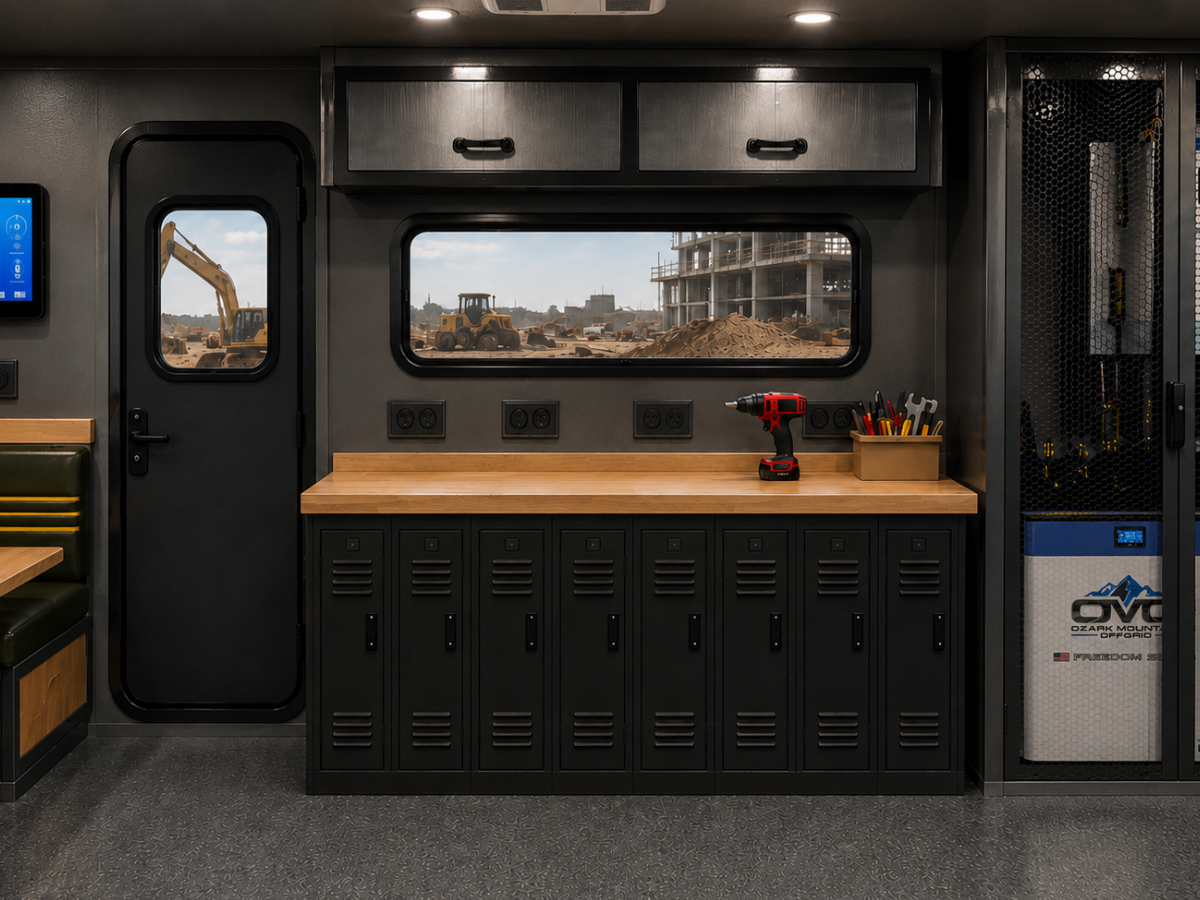
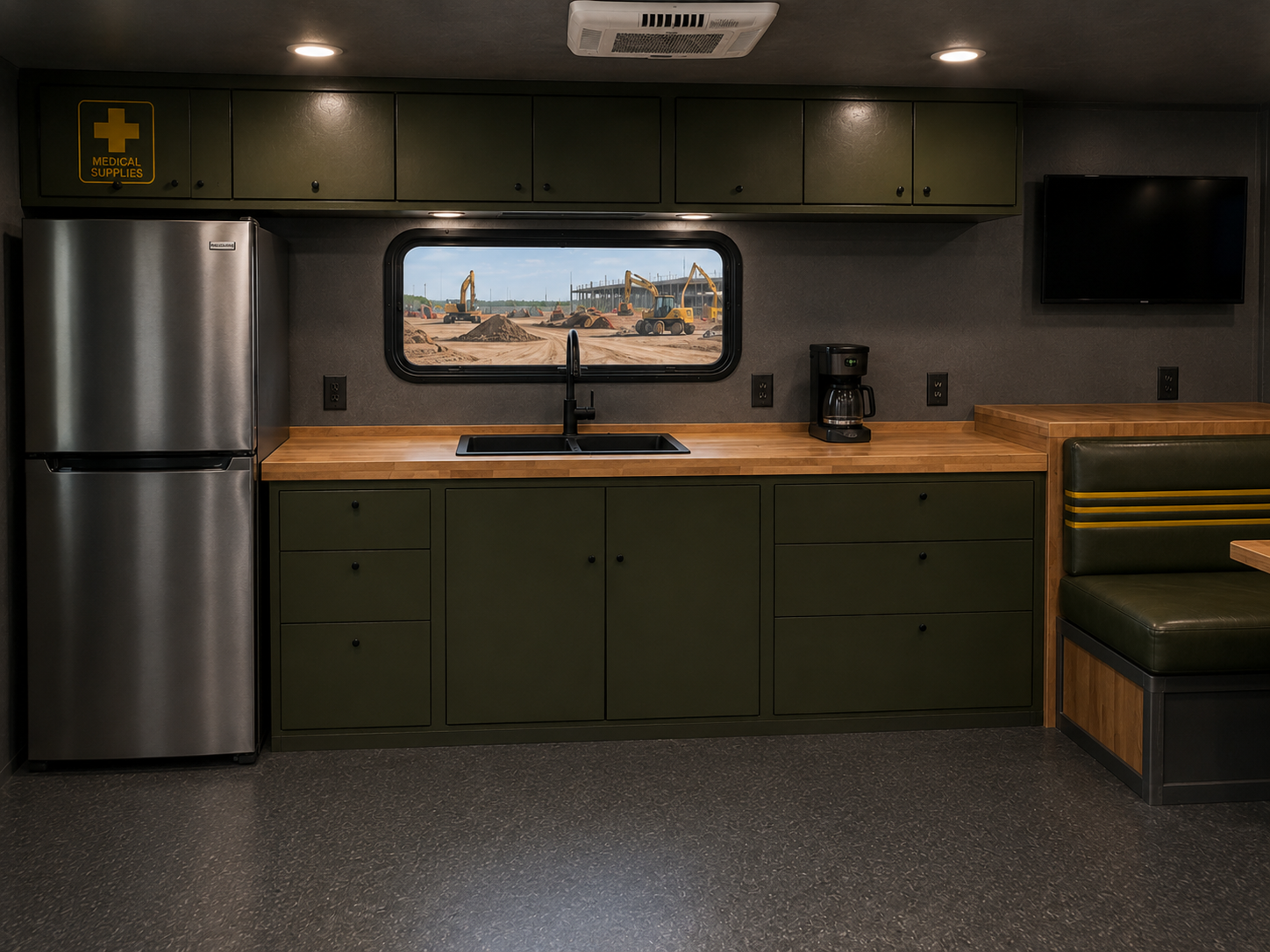
Engineering mobile infrastructure that improves operations in the field.
One integrated solution for multiple site needs.
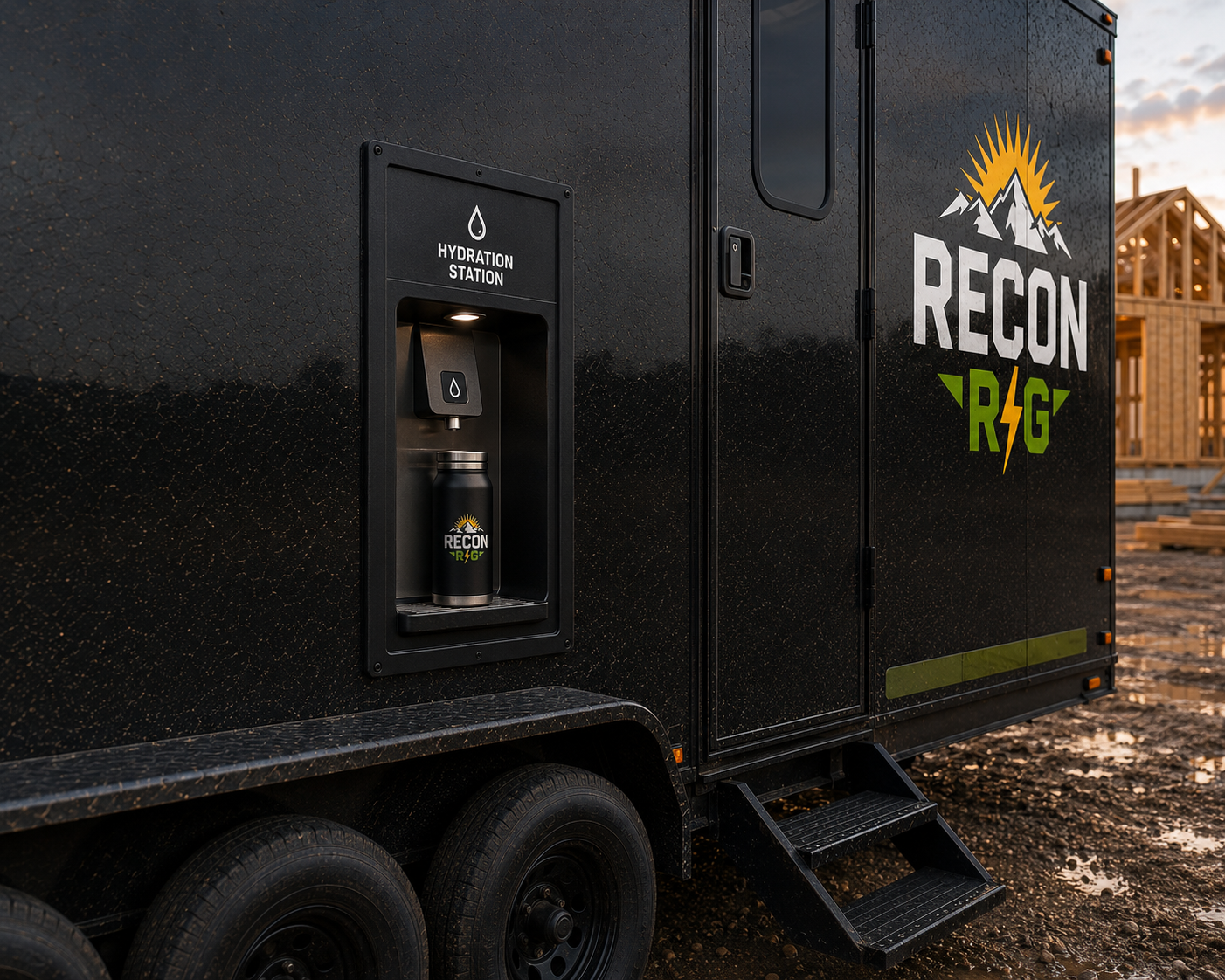
Comfortable, functional crew environments designed with hydration stations, climate-controlled environments, and medical kits.
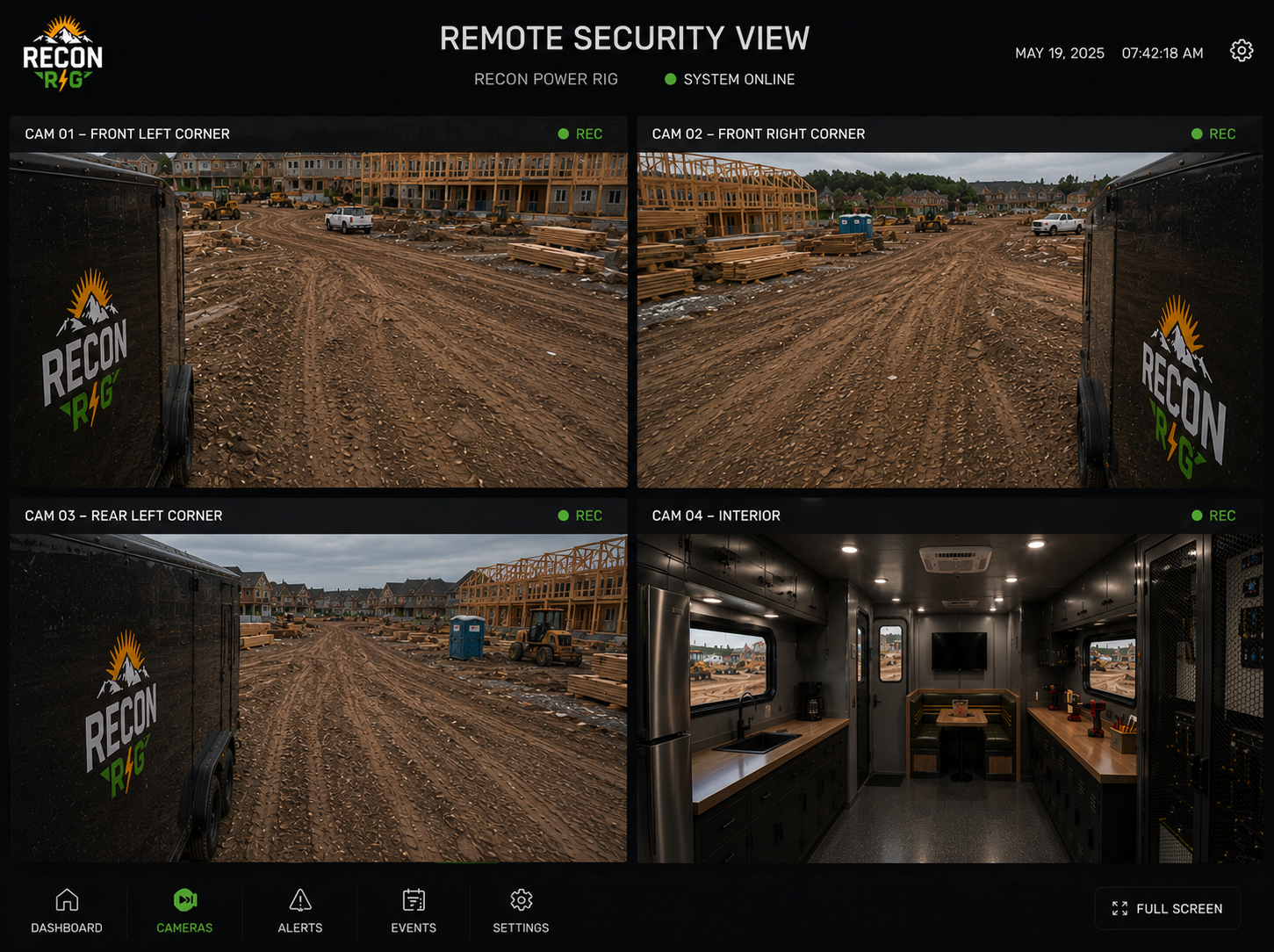
Protect equipment, assets, and personnel with lighting, cameras, control, and visibility built into the platform.
Tell us about your project, power requirements, operational goals, and towing vehicle.
We'll design a Recon Power Rig configured around your mission.